One telescope. One fiber. Both channels.
HelioLink · LICENSED FROM NASA
NASA Glenn's laser-communications team, the group that developed the technology we license, projects global air traffic growing as much as fourteenfold as UAVs and autonomous platforms enter service. Every one of those aircraft needs links, and they all compete for the same finite RF spectrum. The result is congestion and interference that leave pilots, satellites, spacecraft, and UAVs unable to transmit and receive securely when it matters.
Laser links exit that competition entirely: no spectrum allocation, no RF jamming, and a beam narrow enough that intercepting it means standing in it.
NSA's CNSA 2.0 timeline requires national-security systems to run quantum-resistant encryption by 2033, and traffic recorded today can be decrypted the day a capable quantum computer exists. Protection for the quantum era therefore needs two layers at once: links that are physically secure, and encryption that is PQC-compliant.
That pairing is the company: the HelioLink platform secures the link with quantum key distribution, and our photonic-circuit work on H.U.G.0 addresses the encryption hardware.
QKD encodes encryption keys on single photons. Next to a normal high-power data beam, those photons are a candle beside a floodlight, which is why QKD systems have always demanded a second telescope and a second pointing assembly. That doubles the hardware on any platform that wants secure keys along with real bandwidth. On an aircraft, the overhead has simply kept QKD off the platform.
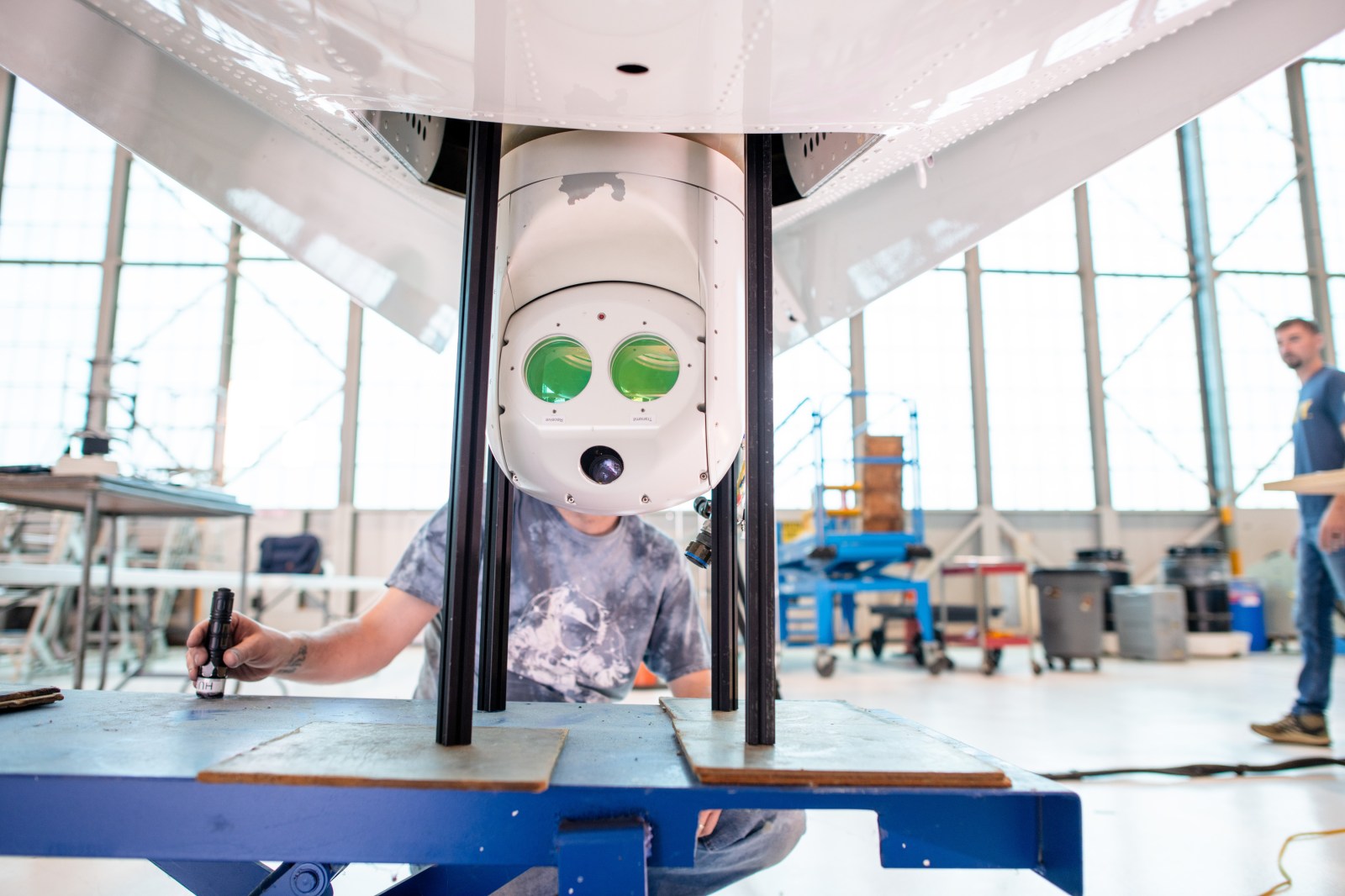
The approach we use was initially developed by NASA's Glenn Research Center. Both signals arrive through the same telescope and land in one commercial double-clad fiber: the quantum photons in its narrow 9 µm core, the data beam in the 105 µm cladding around it. A straw inside a pipe. The lens geometry and the choice of wavelengths do the sorting, so nothing gets duplicated. One telescope, one fiber, both channels.
Our work under the research license is to turn that flight-validated physics into deployable terminals.
Five NASA case files covering the chain from quantum pulse generation to keys that standard encryption can use, licensed for development toward commercial application.
Technology →Investigating quantum random number generation and photonic acceleration of NIST-standardized PQC algorithms: the computational side of the quantum transition.
Research →SDVOSB, SAM-registered, and structured for SBIR/STTR and subcontract roles with prime contractors pursuing secure-communications and photonics work.
Partners →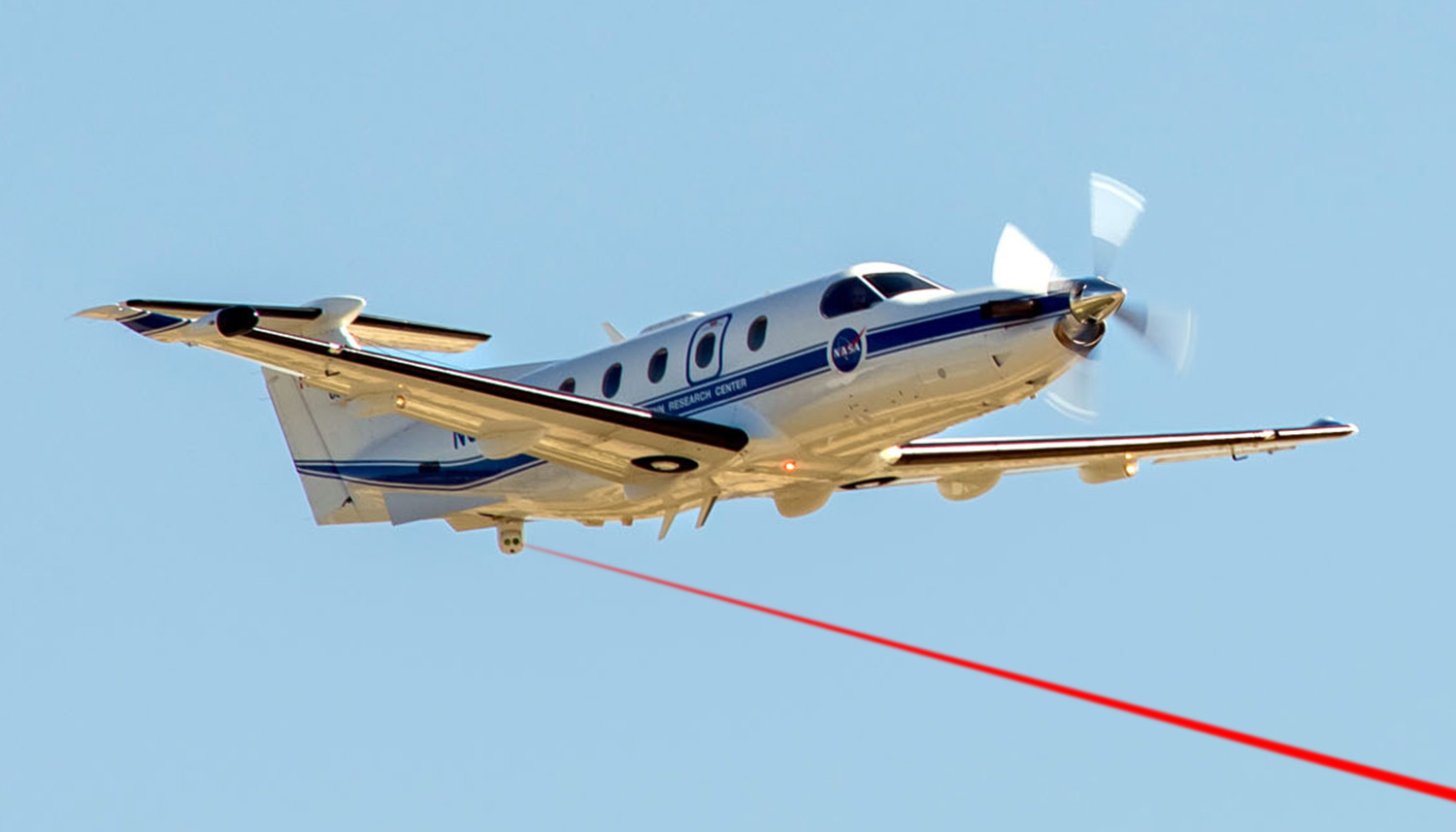
The riskiest years of an optical-communications program are the ones spent proving the link works outside a lab, in real turbulence and real pointing error. NASA Glenn's Airborne Laser Communication Testbed already spent those years: 50+ hours of operational link time across three flight campaigns (2019–2025), on DHC-6 Twin Otter and Pilatus PC-12 aircraft, sustaining gigabit-class rates at slant paths up to 60 km.
In July 2024, the same aircraft and terminal lineage carried the first 4K video stream from an aircraft to the International Space Station and back, at rates exceeding 900 Mbps. The results belong to NASA, and for anyone evaluating us that is the useful part: the physics risk was retired on the government's budget before we licensed the technology.
Source of the licensed transceiver technology; executed research license to the LEW-TOPS-163 suite.
Research partnership with the Nanoscale Design and Manufacturing Laboratory on precision manufacturing questions relevant to photonic hardware.
Research partnership within the U.S. integrated-photonics manufacturing ecosystem for design and fabrication pathways.
Research partnerships and licensing relationships do not constitute endorsement by NASA, the Department of Defense, any federal agency, or any university.
Most of what lands here comes from primes evaluating a teaming role or investors in diligence; research groups with adjacent programs are welcome too. Technical staff read and answer every message.
contact@heliolink.net